
Cooking Fever: Restaurant Game
Nordcurrent GamesArcade
4.4233.31K Reviews
- Version
- 27.1.3
- Installs
- 100.00M
- Age Rating
- Everyone
Screenshots


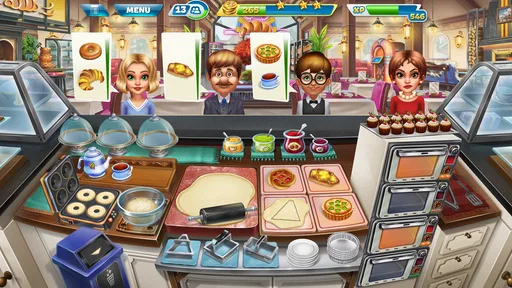
Our Review of Cooking Fever: Restaurant Game
 Analysis by Appyee
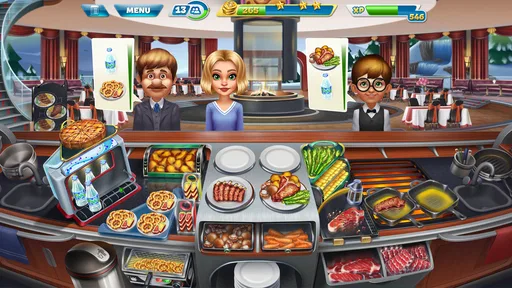
My first impression of Cooking Fever: Restaurant Game is of a bright, busy kitchen that gets straight to the point. I tap through orders, prepare dishes, and try to keep several customers happy at once. The appeal is immediate: each round gives me a small, clear problem to solve, while the colorful presentation makes the rush feel playful rather than grim. It is an arcade game from Nordcurrent Games, and that quick, hands-on focus is a better fit for short bursts than for a slow, story-led evening.
The setup works especially well when I have a few spare minutes: I can play a level, see how well I handled the queue, and decide whether I want another go. That simplicity also makes the pressure easy to understand. Orders arrive, actions need to be timed, and a missed step can throw off the rest of the round. If you enjoy having something to concentrate on during a break, the game gives you a direct task without asking you to learn a complicated control scheme first.
The Thrill of Cooking Fever
I’ll be honest, when I first started playing Cooking Fever, I wasn’t sure what to expect. But from the get-go, the vibrant graphics and catchy music hooked me in. Imagine running a bustling kitchen, with orders flying in faster than you can say "extra cheese". It’s a game that really keeps you on your toes.
A colorful world built around kitchens
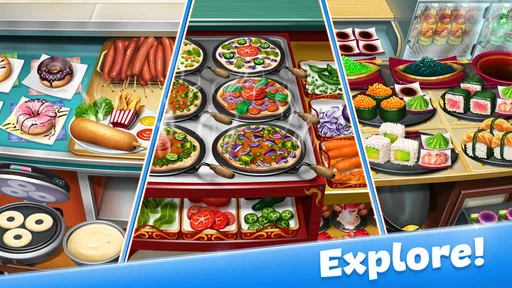
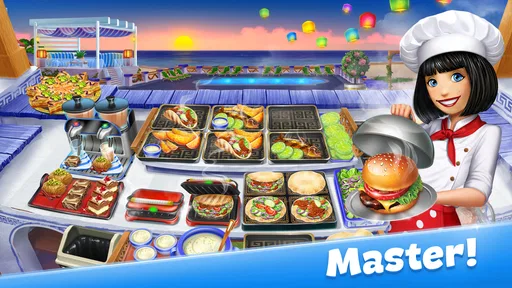
The art direction helps make the different restaurant settings feel like parts of one playful cooking world. The food and kitchen equipment are easy to pick out at a glance, which matters once the screen fills with activity. Rather than relying on a long narrative to give each location character, the game puts the setting into the dishes, appliances, and visual details of the restaurant. That gives me a reason to look forward to a new kitchen: it changes the flavor of the work, not just the backdrop.
The variety is a genuine strength, but it also has a practical side. New dishes and equipment mean I need to adjust what I watch for, rather than simply repeating the same sequence with a different background. When I’m deciding where to focus, I find it useful to treat each restaurant as its own little routine: learn the order flow first, then work out which upgrades would remove the most friction. That approach is more helpful than spending resources at random just because an item is available.
Sound and the feeling of a rush
The cheerful music supports the game’s lively mood, while the action itself supplies the sense of urgency. Together, those elements make a busy level feel energetic without turning the whole experience into something harsh or overly serious. I wouldn’t choose it for a quiet, meditative session; the appeal is in reacting quickly and enjoying the bustle. If you play with sound on, the music adds to that arcade-like rhythm, though the visual cues and clear orders are still the main things I pay attention to.
That rhythm is also why the game works well in small sessions. A level gives me a natural stopping point, so I can fit a round into a wait or a short break instead of committing to a long chapter. The catch is that a quick round can easily become several when I want to improve a result or earn enough in-game currency for a next step. I recommend setting your own stopping point if you only have a few minutes, because the “one more try” feeling is part of the design.
Gameplay and Features
The gameplay is pretty straightforward, which is one of the things I love about it. You start off with a simple diner, gradually unlocking more complex restaurants as you level up. Each level presents new challenges and recipes, so there’s always something to keep you coming back for more.
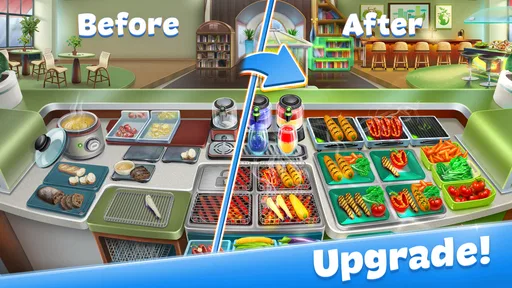
The app offers a wide range of restaurants to explore, from a classic American diner to an exotic Indian restaurant. Each place has its own unique set of dishes and cooking appliances, which adds a fun twist to the game. The more you play, the more you can upgrade your equipment and ingredients to improve your cooking speed and quality.
Planning upgrades instead of tapping at random
The upgrade loop is more interesting when I think about what slows me down in a level. If I keep falling behind while preparing food, an improvement that makes that part of the routine easier may be more useful than a general upgrade that looks appealing but does not address my bottleneck. I also try to notice whether I’m losing time because I’m juggling too many tasks or because I’m making avoidable mistakes. The first problem may call for a different upgrade choice than the second.
This is a small but useful distinction: the game rewards quick reactions, yet not every failure is solved by tapping faster. Taking a moment to learn the order sequence and understand which actions can be handled while another task is underway can make a level feel more manageable. For someone who likes a little planning inside an arcade game, that balance gives the rounds more texture than pure button-mashing.
Who will enjoy the pace
I’d recommend it to players who like time-management games, bright food-themed settings, and clear goals they can tackle in short sessions. It can also suit someone who wants a light mobile game that still asks for attention rather than running itself in the background. The Everyone age rating makes it broadly accessible, and the controls and premise are easy to grasp for a new player.
On the other hand, I would steer away anyone looking mainly for a calm cooking simulator where there is time to experiment with recipes at their own pace. The fun here comes from serving orders under pressure, not from leisurely food preparation. Players who dislike timers, repeated attempts, or progression that asks for patience may find the loop more demanding than relaxing. A puzzle game with no service rush, or a slower simulation, would be a better match for those tastes.
How it compares with other arcade cooking games
Compared with simpler cooking games that keep one kitchen and one routine, this one gets mileage from moving between restaurants and learning different menus and equipment. That variety gives it a stronger sense of progression, but it also means the experience is less uniform: a strategy that works comfortably in one setting may not carry over neatly to another. I see that as a good trade for players who want changing tasks, and a drawback for anyone who prefers mastering one compact set of rules.
It also differs from more relaxed food games by making the service rush central to the challenge. There is less room to pause and admire the setting while customers are waiting. The visual style keeps the action approachable, but the timing still matters. If your favorite part of a cooking game is the pressure of coordinating several orders, this is a more natural pick than a decorative restaurant builder. If you mainly want to design a space or invent dishes without a clock, a different kind of game will serve you better.
A realistic way to fit it into the day
One everyday use case is playing a single level while waiting for a bus or for a kettle to boil. I can focus on the round, finish, and put the phone away without needing to remember a complicated story. If I have more time, I might replay a level to improve my handling of its order flow, then stop before I start treating every round as a chore. That boundary helps preserve the game’s light mood, especially when a level has taken a couple of tries.
For a new player, I’d suggest learning the basic rhythm before spending much effort chasing every available upgrade. Pay attention to which part of a round consistently causes trouble, and use that observation to guide your choices. It is also worth approaching a difficult level as practice in prioritizing, not as proof that you need to play faster at every moment. Those habits make the challenge feel fairer and help you decide whether the game’s pace suits you.
Addictive Elements
What makes this game so addictive? Well, it’s the constant pressure to beat the clock and keep your customers happy. There’s something incredibly satisfying about perfectly timing a series of orders and watching the coins roll in. Plus, the game rewards you with gems and coins, which you can use to unlock new levels and features.
Oh, and did I mention the special events? Cooking Fever keeps things fresh with limited-time challenges and events where you can earn exclusive rewards. It’s a nice touch that keeps the game from feeling repetitive.
Progress, purchases, and patience
The game is free to download, with in-app purchases ranging from $0.99 to $130.00 per item. That broad range is worth keeping in mind before you start: the game’s progression can be enjoyed without paying, but a player who wants to move quickly may feel tempted by purchases. I prefer to treat spending as optional and first see whether I’m still enjoying the regular pace. If you are choosing it for a child, it is sensible to discuss purchases before play, even though the game is rated Everyone.
There is a real trade-off between waiting and paying. Patience can keep the experience free, but it may mean repeating levels or taking a slower route through progression. Spending may reduce that friction, but it can also undercut the satisfaction of earning progress through better play. I would not buy anything just to get past one frustrating round; I’d first revisit my approach and decide whether I’m enjoying the game enough to continue at its natural pace.
A few practical questions before installing
Will it suit a casual player? Yes, if “casual” means playing in short sessions and being comfortable with a little pressure. The levels are easy to approach, but the busy moments still ask for attention. Is it a good choice for someone who wants to relax? Sometimes, especially when the cheerful art and familiar routine are welcome, but it is not consistently soothing because the timer and customer flow create tension.
Does it require payment to be worth trying? No; it is free to start, and purchases are optional, though patience may be needed as progression slows. Is it a good fit for an older phone or tablet? The current version is 26.0.1 and requires Android 9 or later, so that is the compatibility point Android users should check before installing. The game first appeared on Feb 25, 2015, and its long-running audience is reflected in an average rating of 4.4 from around five million ratings, alongside over 100 million installs. Those figures suggest a broadly popular arcade game, but the best test is still whether you enjoy its timed kitchen rhythm.
A Few Things to Consider
Now, while I’ve been singing its praises, there are a few things you might want to keep in mind. The game does have in-app purchases, and sometimes progressing without them can feel a bit slow. But with a little patience, it’s totally doable to advance without spending a dime.
Also, some levels can be quite challenging, which is great if you’re up for it. But if you’re looking for a more relaxing experience, it might be a bit intense at times. Just something to think about!
Final Thoughts
In the end, Cooking Fever is a delightful game that offers a blend of strategy, time management, and creativity. It’s perfect for anyone who loves cooking or just enjoys a good challenge. Whether you’re a seasoned chef or a fast-food fanatic, this game has something to offer.
So, if you’re ready to dive into the world of culinary chaos, give Cooking Fever a try. You might just find yourself whipping up digital dishes for hours on end! Happy cooking!
Verdict
Strengths of Cooking Fever: Restaurant Game
- Wide variety of cuisines to explore.
- Frequent updates add fresh content.
- Engaging and easy-to-learn gameplay.
- Visually appealing and colorful graphics.
- Offline play available for convenience.
Limitations of Cooking Fever: Restaurant Game
- In-app purchases can be costly.
- Energy system limits playtime.
- Repetitive tasks might feel tedious.
- Ads can interrupt gameplay experience.
- Progression can be slow without purchases.
Other Releases by Nordcurrent Games
View All
Pocket Styler: Dress Up Game
Casual3.8

Airplane Chefs - Cooking Game
Arcade4.5

Murder by Choice: Mystery Game
Adventure4.6
Similar Picks in This Category
View All
Subway Surfers
SYBO Games4.6

Stickman Party 234 MiniGames
PlayMax Game Studio4.6

Subway Princess Runner
Ivy4.4

Temple Run
Imangi Studios4.2

Zombie Tsunami
Mobigame SAS4.6

Stack Ball - Crash Platforms
CASUAL AZUR GAMES4.5
You May Also Like
View All
Frequently Asked Questions
What is Cooking Fever: Restaurant Game about?
Cooking Fever: Restaurant Game is a time-management game where players run a variety of restaurants, preparing dishes and serving customers under time constraints. The game involves upgrading kitchen equipment, experimenting with new recipes, and expanding restaurant interiors. Its engaging gameplay and vibrant graphics create a fun and challenging culinary experience.
Is Cooking Fever free to play?
Yes, Cooking Fever is free to download and play on both Android and iOS devices. However, the game offers in-app purchases that allow players to buy gems and coins, which can be used to speed up progress, unlock new levels, or purchase premium items. Spending is optional, and players can enjoy the game without making purchases.
What are the system requirements for Cooking Fever?
Cooking Fever requires iOS 9.0 or later for Apple devices and Android 4.4 or later for Android devices. It is compatible with a wide range of smartphones and tablets. To ensure smooth gameplay, make sure your device is updated and has sufficient storage space available for additional game data and updates.
How can I progress faster in Cooking Fever?
To progress faster, focus on upgrading kitchen equipment and restaurant interiors as these improve efficiency and customer satisfaction. Completing daily challenges and achievements also rewards players with extra coins and gems. Regularly playing and mastering each restaurant level helps unlock new venues and recipes, enhancing your overall progress.
Can I play Cooking Fever offline?
Cooking Fever can be played offline, allowing you to enjoy the game without an internet connection. However, certain features, like accessing the leaderboard or making in-app purchases, require an online connection. Playing offline is perfect for maintaining progress while on the go or in areas with limited internet access.
Play our best games!


